
Jan 16, 2026Anthony.Kim
The Age of Coding Fades, the Age of Directing Arrives: The 80/20 Iceberg Principle of AI Development
This introduces the '80/20 Iceberg Principle,' where AI builds the technical foundation for 80% of the development process while humans take responsibility for the remaining 20% by setting creative direction and final accountability. Discover the core of a future-facing collaboration model that blends technical efficiency with human insight.
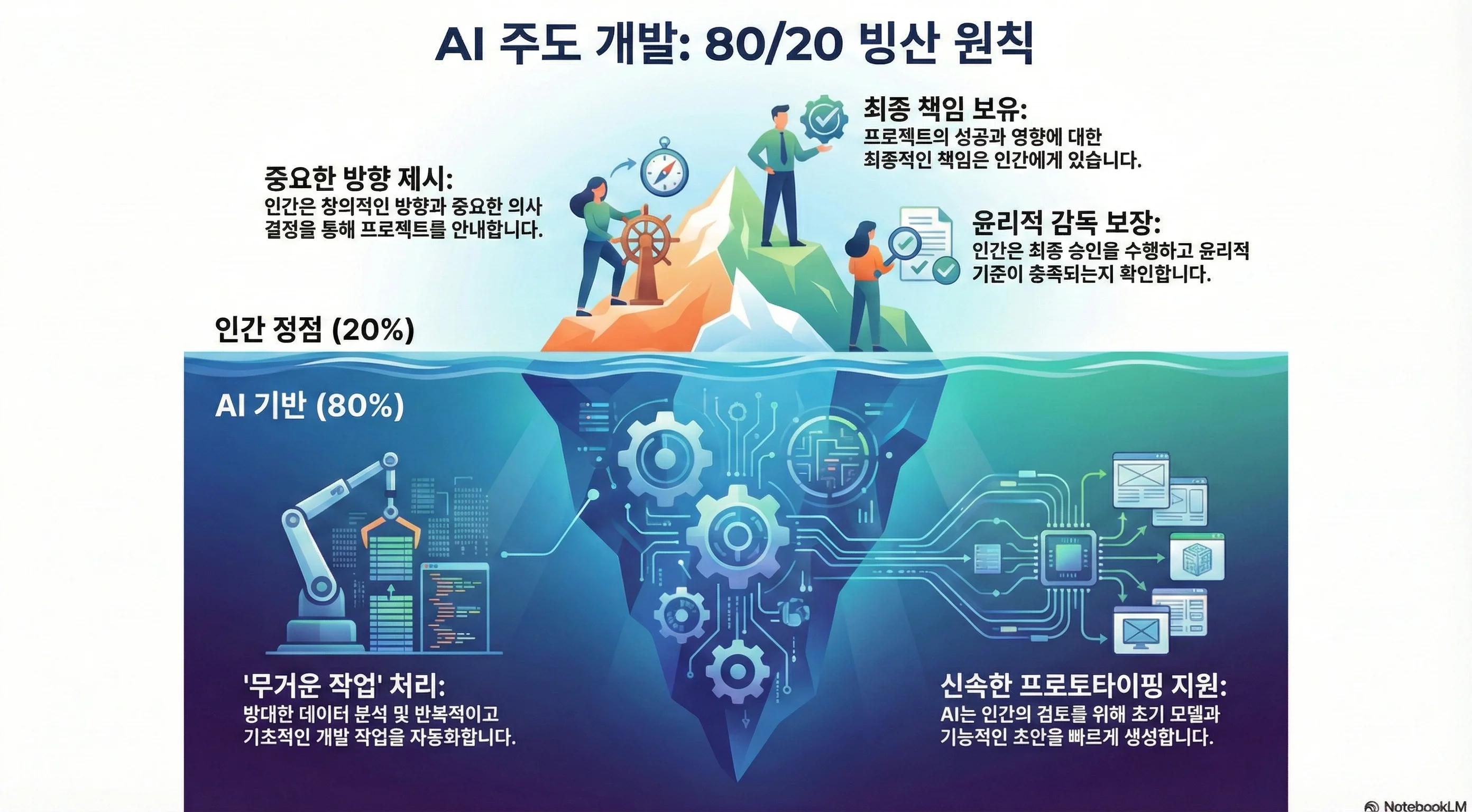
As AI-driven development spreads, a fundamental question is being raised about the role of developers. There is a model that clearly answers, "If AI writes all the code, what should developers do?" That model is the "80/20 Iceberg Principle".
This principle visually defines how AI and humans collaborate to produce the best outcomes through an efficient division of labor.
1. The 80% Below the Surface: AI's "Technical Muscle"
Like the massive body of an iceberg, 80% of the overall development process has moved into AI's domain. This stage is about efficiency and scaling.
- Heavy Lifting: AI handles time-consuming tasks such as large-scale data analysis, repetitive boilerplate code, and automated tests.
- Rapid Prototyping: By simply entering ideas, AI quickly generates initial models and functional drafts that run.
Now developers can drastically reduce the time spent staring at a blank screen wondering "how to write the code."
2. The 20% Above the Surface: The Human Developer's "Decisive Edge"
If AI lays 80% of the foundation, the remaining 20% is a unique domain that only humans can fill. Like the tip of the iceberg, this part becomes the "direction" that determines success or failure.
- Critical Direction: Set the right direction for the project and make key decisions amid complex business logic.
- Ethical Oversight: Check ethical standards that AI can easily miss and ensure fine-grained quality from a UX perspective.
- Ultimate Accountability: AI can help with implementation, but the final responsibility for a service's impact on the world must be held by humans.
3. The Aesthetics of "Critical Handover"
The most important point in this model is the "handover process" where AI outputs move into human judgment.
The developer reviews the 80% of code and features generated by AI and raises the quality with their own insights. How smoothly this happens becomes true development capability. It is not about accepting AI output as-is; it is an era that demands the ability to act as a "director" who uses AI as a tool to solve higher-level problems.
Closing: Expansion, Not Replacement
AI does not replace developers; it is a powerful lever that expands their capabilities. By delegating technical drudgery to AI, we can focus on more creative and valuable questions.
What 20% of value are you adding today on top of the 80% foundation that AI has built?
More posts
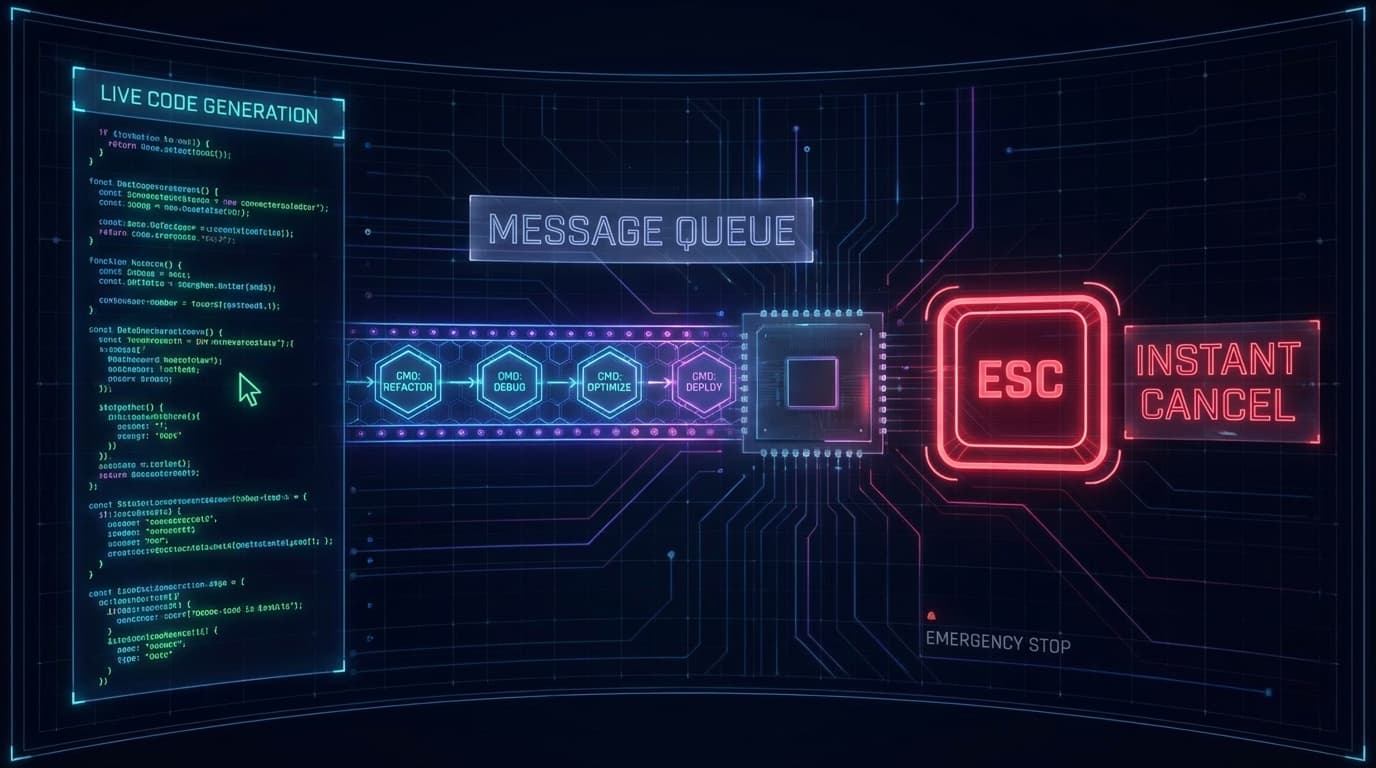
Type next instructions while AI is streaming, cancel with a single ESC press. Also includes Gemini 3.1 Pro Support, Direct VSIX Download, CLI sub-agent execution, and v0.4.7 infinite loading fix.
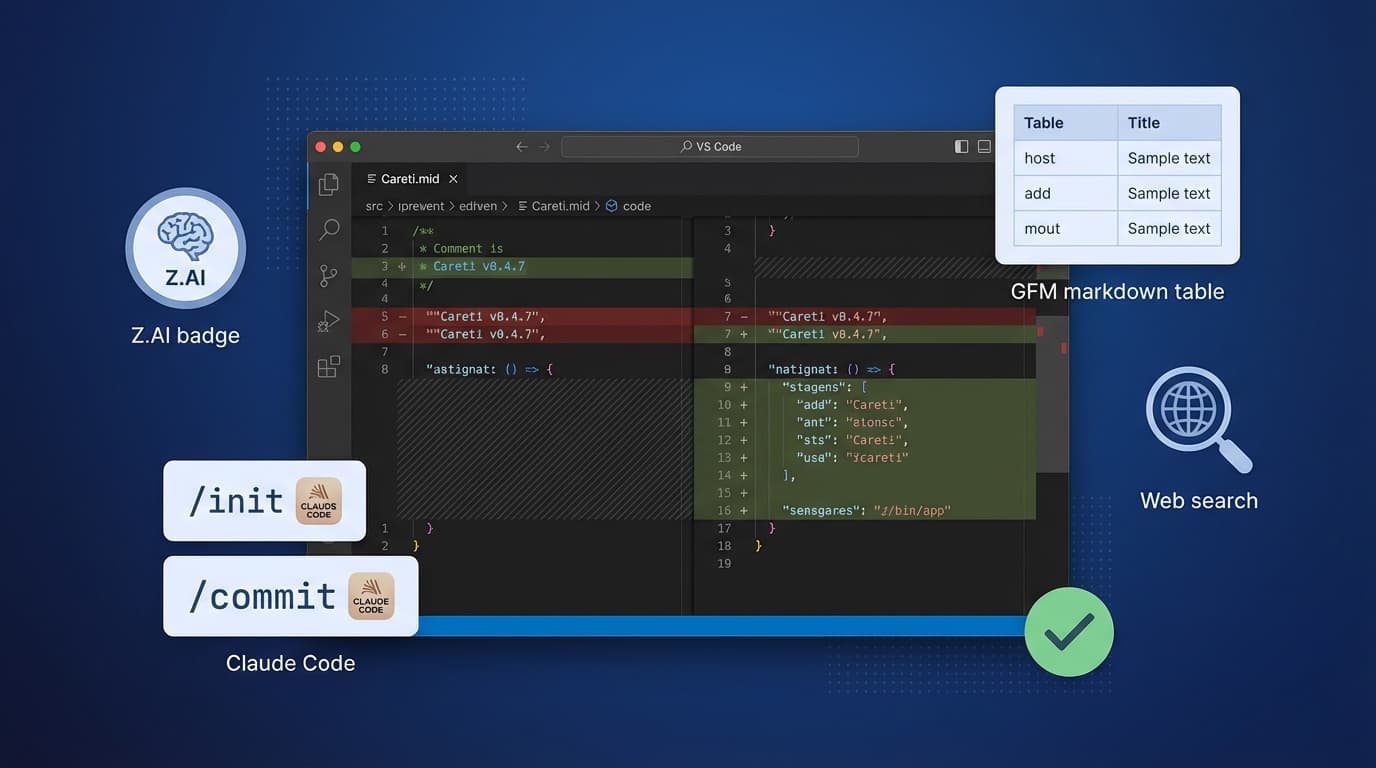
Careti v0.4.7 adds Z.AI GLM-4.7 model, Claude Code compatible command system, SmartEditEngine improvements, and UI enhancements.