
Jan 16, 2026Luke
K-Cursor 'Caret' Dev Team Interview - See You at the Jan 21 Webinar
Caret is hosting a webinar with OKKY, Korea's leading developer community. We're sharing the interview content from OKKY ahead of the webinar.
Caret is hosting a webinar with OKKY, Korea's leading developer community. At this webinar, we'll discuss the challenges developers face and the vision of Caret, which aims to be the K-Cursor.
All webinar attendees will receive free credits for Caret, and those who ask questions will receive a copy of 'Vibe Coding Today: v0 + Cursor Introduction - PRD Planning, Development, Deployment in One Week' written by our CIO. We hope to see you there!
Before the webinar, OKKY conducted an interview with us, and we're sharing that content here. We hope you enjoy it!
ps. They asked for team photos, but we didn't have any good ones, so we sent a photo from our first team dinner. We've been working together for a while, but it was really our first dinner out because we've been so busy. Please excuse the awkward photo.
Original: https://okky.kr/user/168897/articles/1550333
Original Title: [O.Man.Gae] Korean Cursor?! Meet the Caretive Team Behind Korea's AI Coding Tool 'Caret'
Hello! OKKY's ambitious project, 'Developers OKKY Met (O.Man.Gae)', is back!
AI coding tools are really hot these days, right? After hearing about Cursor and Claude all the time, I suddenly became super curious when I heard about an AI coding tool developed in Korea!
So OKKY proposed a webinar, and we're hosting one on January 21st at 6:30 PM!
But we thought it would be nice to introduce the Caretive team to OKKY members before the webinar.
So here's our interview about 'Caret, the Korean AI Coding Tool'! Let's dive in!
1. About the Team
Q1. How did the Caretive team come together? We're curious about each member's background and role in the team.
Currently, three core members are building Caret. All three of us are developers to the bone. Rather than "just developers," we're people who each have our own developer brand.
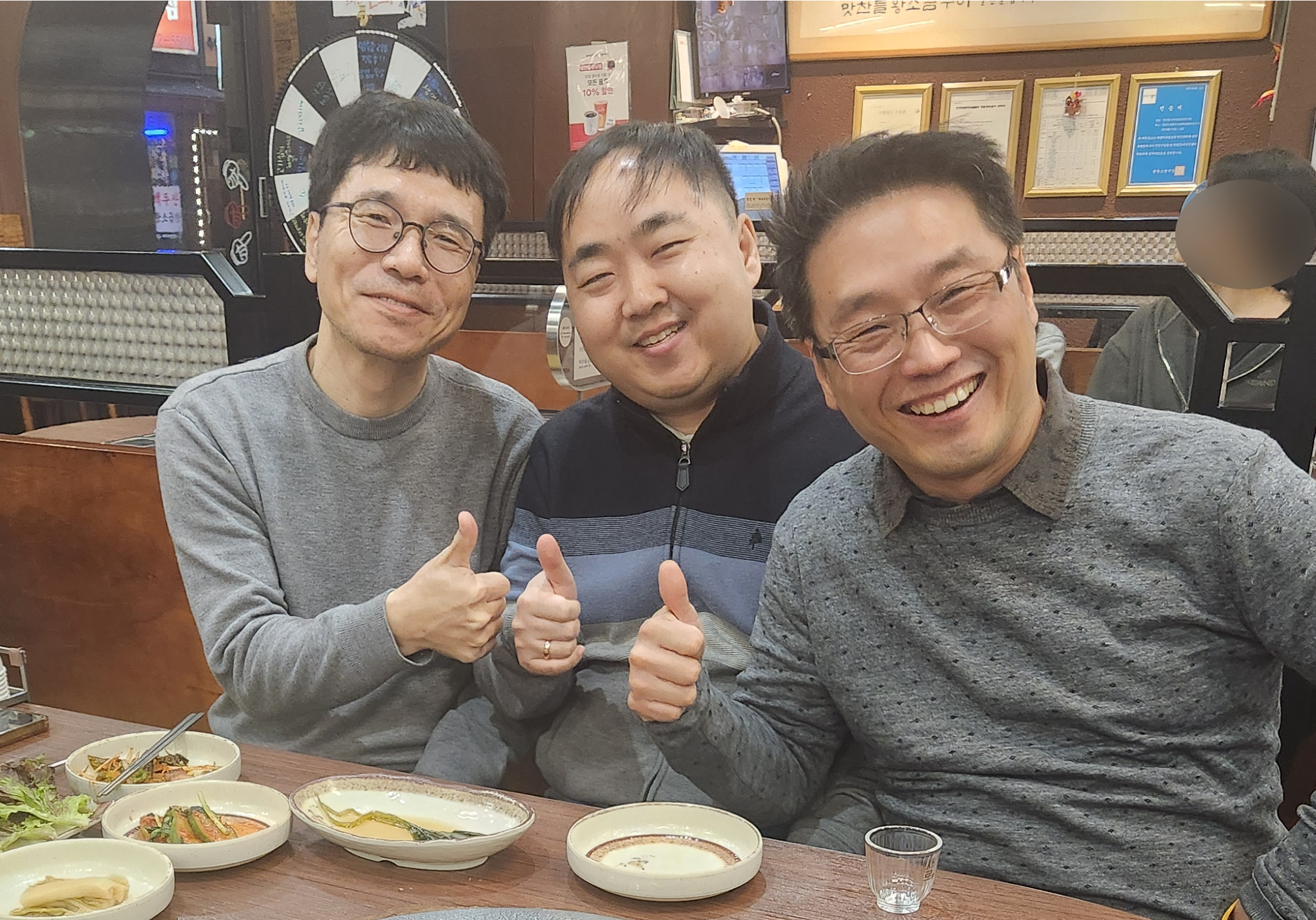
It started as a personal project by CTO Byungseok Yang (Luke). He had various experiences at Naver, from AI image text recognition engine research to webtoon operations and mobile strategy, and later ran a VR/metaverse startup. But last year, when the company situation became difficult, he ended up handling development alone. That's when Cursor helped him a lot. Then one day, this thought suddenly came to him: "Wait... can't I build this myself?" That's how it started. And he kept sharing that journey on social media, engaging with the developer community.
CEO Kihwan Kim is a college classmate. He's a veteran who has worked on SI projects like Samsung Fire & Marine Insurance and NIKE settlement systems for 18 years. OKKY members can probably relate - being from an SI background, he felt pressure about falling behind in the AI era. During a break period, he saw the CTO sharing AI development on social media and reached out saying "let's study together"... and ended up co-founding a company. We later learned that going from studying together to starting a company happens more often than you'd think.
CIO Anthony (Donghak Kim) is the author of 'Vibe Coding Today' and runs the Facebook Vibe Coding community. He's been a full-stack developer for over 20 years, building groupware and CRM systems, and has steadily built his developer brand through his YouTube channel and blog. He currently handles Caret's server and is particularly interested in RAG and legacy code conversion.
Ultimately, this team is a structure where branded developers collaborate loosely, using AI as a lubricant. We believe individual developer brand value will become more important in the vibe coding era, and our team itself is an experiment in that.
Q2. Challenging the AI coding tool market dominated by global giants must have been a difficult decision. Was there a decisive moment or frustration that made you think "we need to build this ourselves"?
Honestly... it was expensive. Cursor Pro alone wasn't enough for big projects, and Claude Max or Cursor Ultra cost $200 per month. You think "it's just tool costs," but your hand trembles when you're about to pay.
But what was more frustrating than the price was Cursor's structural limitations. When I analyzed the internals through prompt hacking, external API usage wasn't free, and I couldn't use local LLMs like Ollama. The anxiety that I have to send all my code and concerns to the company's server remains. Every developer has thought this at least once: "I can't control this, right?"
So at first, I thought "what if I make my own open-source plugin for VS Code?" Developing with AI agents, it seemed doable. The biggest barrier was cost, so I hesitated, but someone I knew said "I'll support you, go for it," so I started in earnest.
After a day of work, I was scrolling Facebook before bed when someone recommended a VS Code open-source called 'Cline'. The next day, I had my AI agent 'Alpha' analyze it... and it came back with a report saying "you should quit and contribute to Cline instead." So when I tried building on Cline, the performance improvements were so good that the moment I thought 'wow, this could work,' I decided to start a company. All these decisions happened in just one day. That's what development speed in the AI agent era feels like.
Q3. The service name is 'Caret'. It also refers to the blinking cursor when coding. What philosophy did the team put into this name?
Caret (^) is a text cursor, and in online chat, it's used to express laughter (^^) or agreement. But when I looked up the etymology, it had a surprisingly philosophical feel. It comes from Latin meaning "it lacks," but paradoxically has the meaning of proofreading by inserting something to fill in. In linear algebra, it also means a unit vector indicating direction.
Aiming for success like Cursor, but an AI tool that fills in what's lacking and points the direction. We thought this image matched the name well.
The company name 'Caretive' is a combination of Caret and Creative. By the way, both this name and logo design were created in collaboration with ChatGPT. "A company made with AI makes products made with AI" - it creates a neat worldview.
2. The Development Process for Problem Solving
Q4. What was the most difficult technical challenge during development?
Bottom line: finding the 'methodology' of working with AI was harder than the technology itself.
Technology changes too fast. Yesterday's answer suddenly becomes "that's not it anymore" this morning. Since there's no fixed answer, the process of experimenting, failing, and trying again kept repeating. It's unpredictable. Really.
Actually, I don't really agree with "an era is coming where anyone can make apps with vibe coding." Most people don't even know what they really want. I think the process of crystallizing what you want is the core of software development. The real value of vibe coding isn't making apps - it's learning how to collaborate with AI agents.
Q5. It's interesting that "nunchi" (social awareness) and "history" were mentioned in the webinar introduction. What approach did you take to implement this concept of 'nunchi' in code or data?
Implementing "nunchi" ultimately comes down to how well you remember and utilize context. In other words, the AI needs to know "what to do at this timing."
Our team itself is the test bed. We're using Git as a repository to record everything with AI and building an organization that works with our self-developed AI (Caret). The goal is for the AI to understand project structure and previous decisions on its own, without developers having to explain at length every time.
Going forward, we plan to expand with RAG and fine-tuning to create a model that understands our organization. For details... we'll show you at the webinar.
Q6. Were there specific cases where you felt "this really doesn't work" while using various global AI tools?
It's not just a problem unique to the Korean development environment - the design philosophy of global AI tools itself is heading toward "AI will do everything alone."
Looking at Cursor's Agent mode or Claude Code, they're designed to leave everything to the AI. But that's not how real development works. AI is sometimes incredibly smart, but at other moments suddenly produces results that make you think "why did it do that?" There are definitely moments when developer judgment is needed, and ignoring that actually takes more time.
As a software engineer, complete black boxes are frustrating. And I want my own AI. Caret pursues a way where developer and AI work in sync together, rather than AI taking the lead.
3. Technical Depth and Differentiation
Q7. How is the security design structured to prevent code leakage when used by enterprises?
Since we're targeting the B2B market, security has been a core consideration from the start.
We designed it to support sLLM (small language model) integration. If companies run their own models internally, code never leaves. We also allow external API key registration, so companies can directly connect models they want to use.
We understand the security requirements of Korean companies, especially the SI industry, well, so we're quite confident in that area.
Q8. Caret seems to have features not seen in existing AI coding tools, like setting up your own character. Could you introduce a few?
Let me share what's currently public.
100% Cline Compatible + Dual Mode
It's based on Cline, the verified open-source with 4 million global installs and 56,000 GitHub stars. You can freely switch between pure Cline mode and extended Caret mode, so existing Cline users can switch right over.
Free Credits & 200+ Model Support
Free credits are provided upon signup, and we support over 200 LLMs including Korean sovereign models. With Ollama integration, you can use it locally at no cost.
4-Language UI & Persona
We support Korean UI that Cline doesn't, and provide the experience of coding with your own AI coding partner (persona).
There are additional features we'll reveal at the webinar. We're also preparing something called 'Caret Apps'... it's our answer to the questions "how do I validate this?" and "how do I utilize this?" when you've made something with vibe coding. Details at the webinar.
4. Caret's Vision
Q9. What does Caretive team's dream of 'the future of Korean developers with AI' look like? Beyond being a simple tool, what do you hope Caret becomes for developers?
We believe AI should become a 'Partner', not a 'Companion'.
These days, many AI services position themselves as "comforting companions." But that's not what we want. A horizontal relationship where two beings with different abilities cooperate back-to-back toward the same goal. An active collaborator that goes beyond simple assistance to propose, debate, and solve problems together.
Honestly, I don't know if the term 'developer' will remain the same in the future. Maybe 'maker with AI' would be more accurate. But what's certain is that the essence of a software developer isn't 'someone who codes' but 'someone who solves problems with software.' That won't change in the AI era.
If we have a dream, it's to hear from AI in the future: "Thanks to Caret, we got to work happily with you." Becoming a real partner, not just a tool.
Q10. What's one key takeaway you hope people get from the January 21, 2026 webinar?
AX (AI Transformation) isn't just about code. Organization and culture need to change together.
"Is Claude Code better, Cursor better, or Gemini better?" I actually don't think that's the priority. What really matters is "how will AI collaborate with humans across all areas - code, documents, and processes?"
And you've all made a lot of code with vibe coding... but "how do I sell this?", "how do I maintain this?" - you all have these concerns, right? At this webinar, we're going to present our solutions to those concerns. Not just "here's a tool," but "try changing how you work like this."
Q11. In the distant future when Caret has achieved much higher status than now, how would you feel hearing "Caret changed my development life like this"?
As I mentioned, I want to look broader than just 'development life.'
Everyone who makes something with computers, with AI. I hope they can make things more easily and enjoyably through Caret.
And in the really distant future, I want to be recognized not just by people but by AI too. "Thanks to you, we were able to become partners with humans."
Q12. Final words: Lastly, please say something to fellow Korean developers who are battling legacy code at this very moment.
Last year's cold wave in the developer job market, and on top of that, political turmoil... Everyone's anxious about whether developer demand is decreasing because of AI, right? We felt that too. The CTO faced company closure and failure, the CEO was afraid of falling behind at the SI field.
But paradoxically, that anxiety brought us here. AI replacing developers? No. Developers are the ones who use AI best and most. Technology advancement is scary, but as engineers, it's also a really exciting era.
We want to solve the legacy code problem and show all developers the path to AX. Don't fight alone - join us. See you at the January 21 webinar!
If you're curious about 'Caret, the Korean AI Coding Tool', join the webinar hosted by OKKY and Caret on January 21 (Tuesday) at 6:30 PM! It's free, but we've prepared content richer than any paid webinar!
More posts
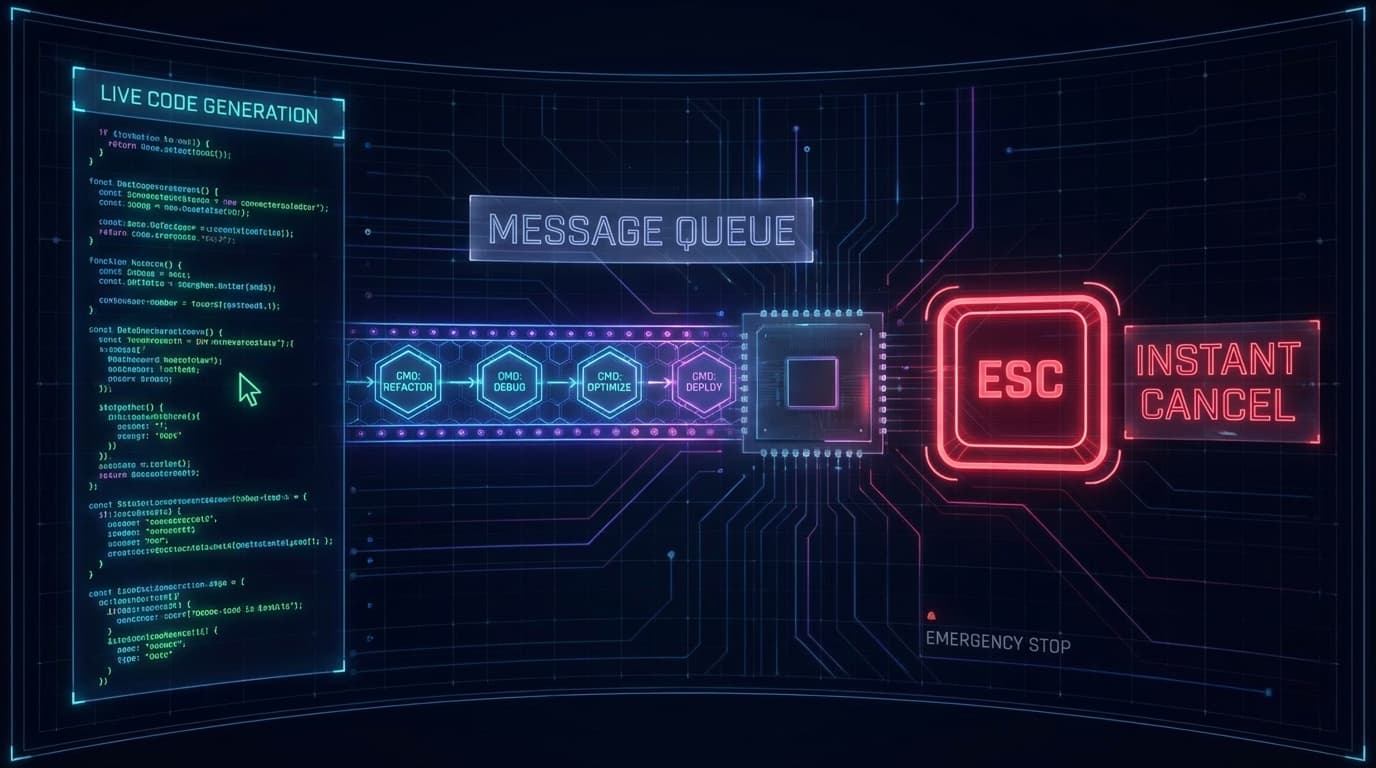
Type next instructions while AI is streaming, cancel with a single ESC press. Also includes Gemini 3.1 Pro Support, Direct VSIX Download, CLI sub-agent execution, and v0.4.7 infinite loading fix.
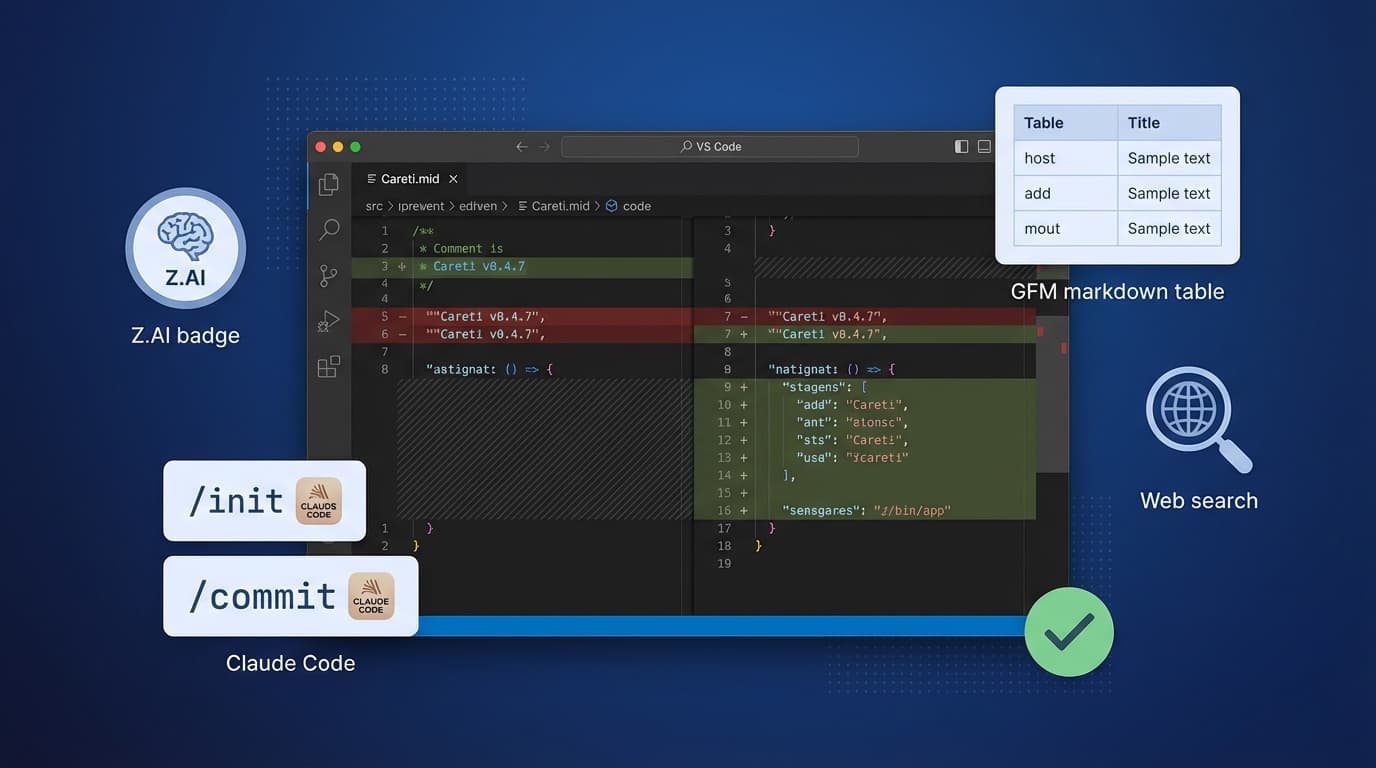
Careti v0.4.7 adds Z.AI GLM-4.7 model, Claude Code compatible command system, SmartEditEngine improvements, and UI enhancements.